

Midlife Mums, Menopause and Muscle

When we talk about physio-related things that affect mums, we often focus on new mums.
There’s another important transitional period that affects another group of mothers: perimenopause and menopause.
This hormonal transition often shows up right in the middle of some busy parenting years.
It can be hard enough managing sleep schedules, school runs, work, and life admin and then your own body starts changing in ways that can feel frustrating, unfamiliar and invisible to others.
While fluctuating hormone levels can impact strength, joint health, energy, and recovery, it’s not all bad news. As more research focuses on women in this phase of life, we’re learning there’s a lot you can do to stay strong, resilient, and active well into your 40s, 50s, and beyond.
What is Perimenopause?
Menopause is officially reached when a woman hasn’t had a menstrual cycle for 12 consecutive months. Perimenopause is the period of time leading up to this. this is different for every woman but for some, it can last up to 10 years.
Perimenopause often starts in the 40s (sometimes earlier or later), when hormone cycles that were once predictable start to fluctuate. These shifts can affect everything from mood and sleep to muscle strength and injury risk.
Some common signs include:
Irregular periods
Fatigue
Sleep disturbances
Hot flushes
Increased anxiety or mood swings
New or worsening joint and muscle pain
How Does Hormonal Change Affect Your Muscles and Joints?
1. Joint Stiffness and Aches
Estrogen isn’t just about periods. It plays a big role in joint lubrication, connective tissue health, and even brain and heart function. As levels decline, joints may feel stiffer or creakier, especially in the morning or after sitting for long periods.
2. Slower Muscle Recovery
Your muscles may take longer to bounce back after exercise. That “I’m still sore from two days ago” feeling becomes more common, even after activities you used to recover from easily.
3. Tendon Troubles
Tendons become more sensitive to load changes during this time. That’s why we often see an increase in tendon issues like gluteal tendinopathy, tennis elbow, or Achilles pain in active women around midlife.
4. Bone Density Starts to Drop
For both men and women, our bone density increases up until our 30’s but then starts to slightly decline. Estrogen helps protect against bone density loss, meaning when women hit perimenopause this decline heightens, especially if strength training isn’t part of your routine.
Despite this, we can still build strength at any age and life stage!
A recent 2025 study from the University of Exeter put the myth that menopause stops women from being able to get stronger to the test.
Researchers followed 70 women between 40–60 years old, all of whom were relatively sedentary and not on hormone therapy. They split the group into:
A control group (no training)
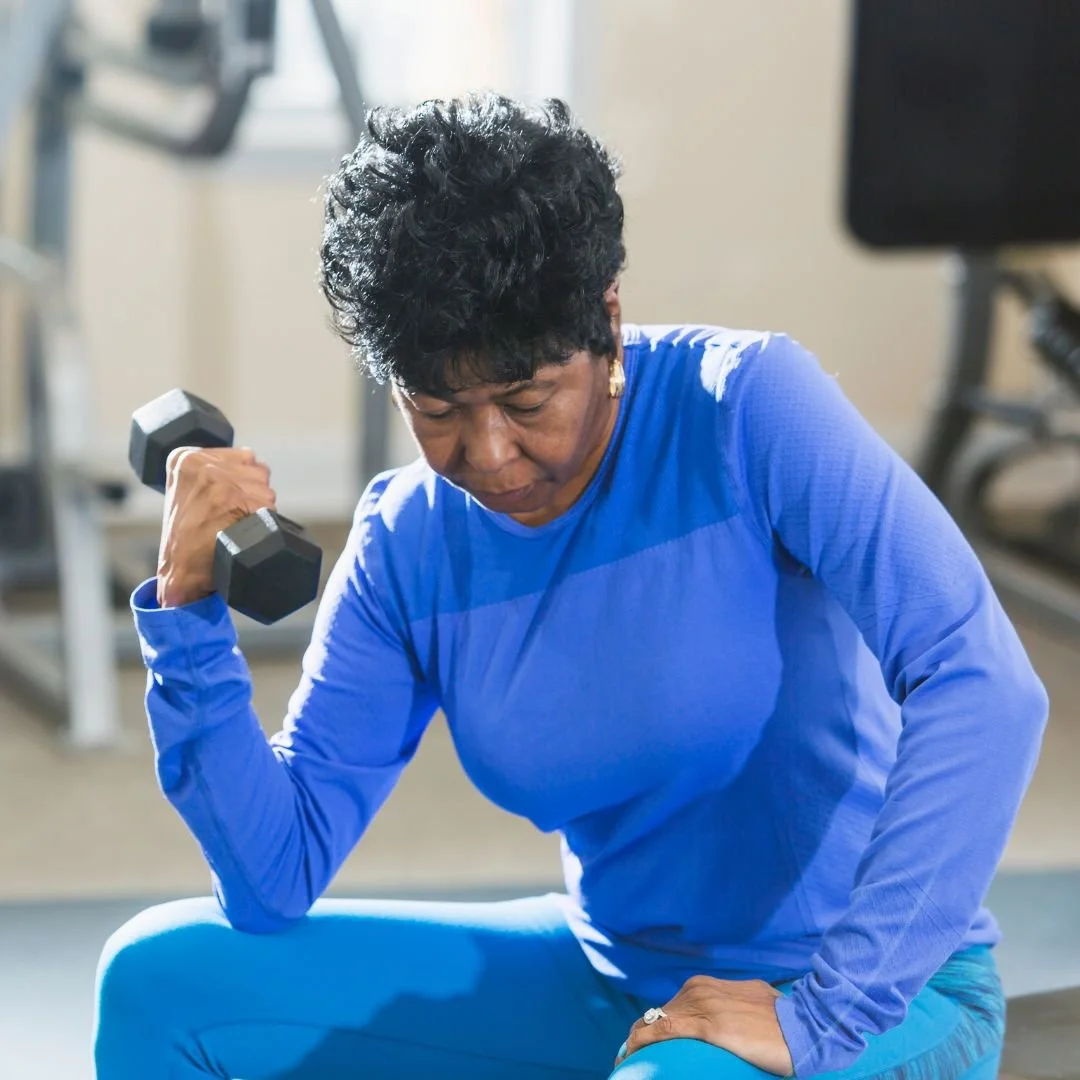
A training group doing low-impact resistance exercise (resistance bands, light ankle/wrist weights, and bodyweight movement) 4x/week for 12 weeks
The result? Women in the training group — across pre-, peri-, and post-menopause — all gained:
Hip and shoulder strength
Thigh muscle mass
Balance
Flexibility
Lean muscle mass
In other words: they got stronger, regardless of their stage of menopause.
Why Does This Matter for You?
Because you don’t have to “just accept” feeling weaker or more injury-prone. Your body is still highly adaptable, it might just need a slightly different approach than what worked when you were 25.
You don’t have to do high-intensity training or throw around huge weights to make progress. Starting small, staying consistent, and training in a way that respects your current capacity works.
And if you’ve been feeling like you're too tired, too sore, or too far behind to start? This research shows that even previously sedentary women made big improvements with just a few weeks of consistent movement.
What Kind of Exercise Makes a Difference?
The program in the study used:

Resistance bands
Ankle and wrist weights (0.5–5kg)
Bodyweight exercises (squats, lunges, planks)
Single-leg balance and stability work
It’s not so different from what we use in our Fortify Rehab Group or 1:1 rehab and strength sessions — it’s all about progressive, low-impact movement individualised to your goals and lifestyle.
Adventure Physio Takeaways for Mums in Midlife
- You don’t have to “go hard” to see results, but you do have to show up regularly and consistently
- Hormones shift, but strength is still on the table. Don’t write yourself off.
- Balance and tendon health are trainable. You’re not doomed to creaky hips and heel pain.
- Start where you are. It’s never too late (or too early) to begin.
- Every single one of the menopause symptoms listed at the start of this article are eased by exercise, including bone density loss
Want help getting started?
If your body isn’t bouncing back the way it used to, you want guidance through the perimenopause transition, or you have some injuries that need some love and attention, this is exactly the kind of stuff we love helping with.
You can book in for a session or join our Fortify Rehab Group, a small-group class designed to support people through all stages of rehab, prevention, and strength-building.
Mums, we see you. You do so much for others, your body deserves some attention too.
If your body isn't bouncing back the way it used to, you're not imagining it and you're not past it. This is exactly the kind of thing we love helping with at Adventure Physio
A Novel Low-Impact Resistance Exercise Program Increases Strength and Balance in Females Irrespective of Menopause Status https://journals.lww.com/acsm-msse/fulltext/2025/03000/a_novel_low_impact_resistance_exercise_program.6.aspx