

Why Everyone Should Train Balance: Stay Healthy, Active, Free
I have clients across the broad spectrum of the lifespan- from 12 to 80 years old. We all need to train our balance.
Of course, a large part of this is to prevent falls and the side effects of falls for our older folk, but people benefit from balance training throughout every decade of life.
What is balance?
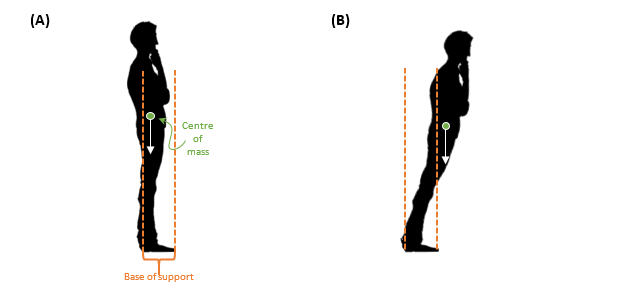
Balance is your body’s ability to keep its centre of mass over its base of support while you move, twist, react and explore the world.
If the centre of mass (COM) is above the base of support (BOS) – you’re balanced. If it’s beyond it, you fall.
The image of the person falling almost looks like they could be taking off to run – you need to move your COM away from your BOS for forward propulsion when moving: running, leaping, even walking. This is why people with poor balance move slowly and carefully.
A lot of things are happening in your body to keep you balanced. Your muscles, joints, vision, inner ear and nervous system all work together to communicate information about your environment and where you are in relation to it, and to act on that information to keep you stable and balanced. All of these systems can (and should!) be trained.
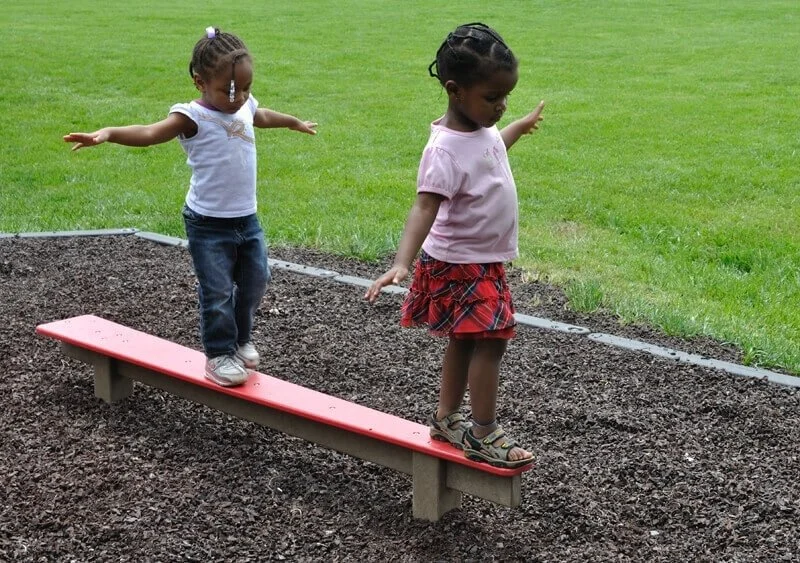
Balance is a fundamental skill- for every age group
Some children and teenagers who have trouble with balance might seem uncoordinated, injury-prone or clumsy. These kids often don’t like playing sports or doing PE at school. They might have problems running, walking, throwing, riding a bike and playing. Balance problems can even affect how they learn if they have issues with sitting to do their schoolwork.
In younger adults, balance issues might still show up as an aversion to physical activity and a preference for more sedentary hobbies and work. They might be more injury-prone than others, have trouble in crowded environments and on unpredictable surfaces like sand or slippery footpaths.
Even in younger adults, poor balance can be a big barrier to doing the things that are exciting to them in life, like hiking a mountain or playing with kids and pets.
Like most things, balance is a spectrum from dysfunctional to functional. In a more active group of adults, we can still work on optimising balance even if it isn’t clearly dysfunctional.
This can help with sports, hobbies, work and general health. Balance is an important skill for maintaining health as we get older. If an older person has had balance issues all their life, it’s a harder skill to work on than if they had practiced and trained their balance throughout their life.
As we get older, our balance usually begins to suffer if we don’t train it. For some people, this means losing their independence as they walk with a walking frame or stick because of fear of falling. As balance is such a complex thing, there’s no simple solution to improving this and it can be hard to come back from.
Prevention is definitely better than a cure when it comes to losing balance.
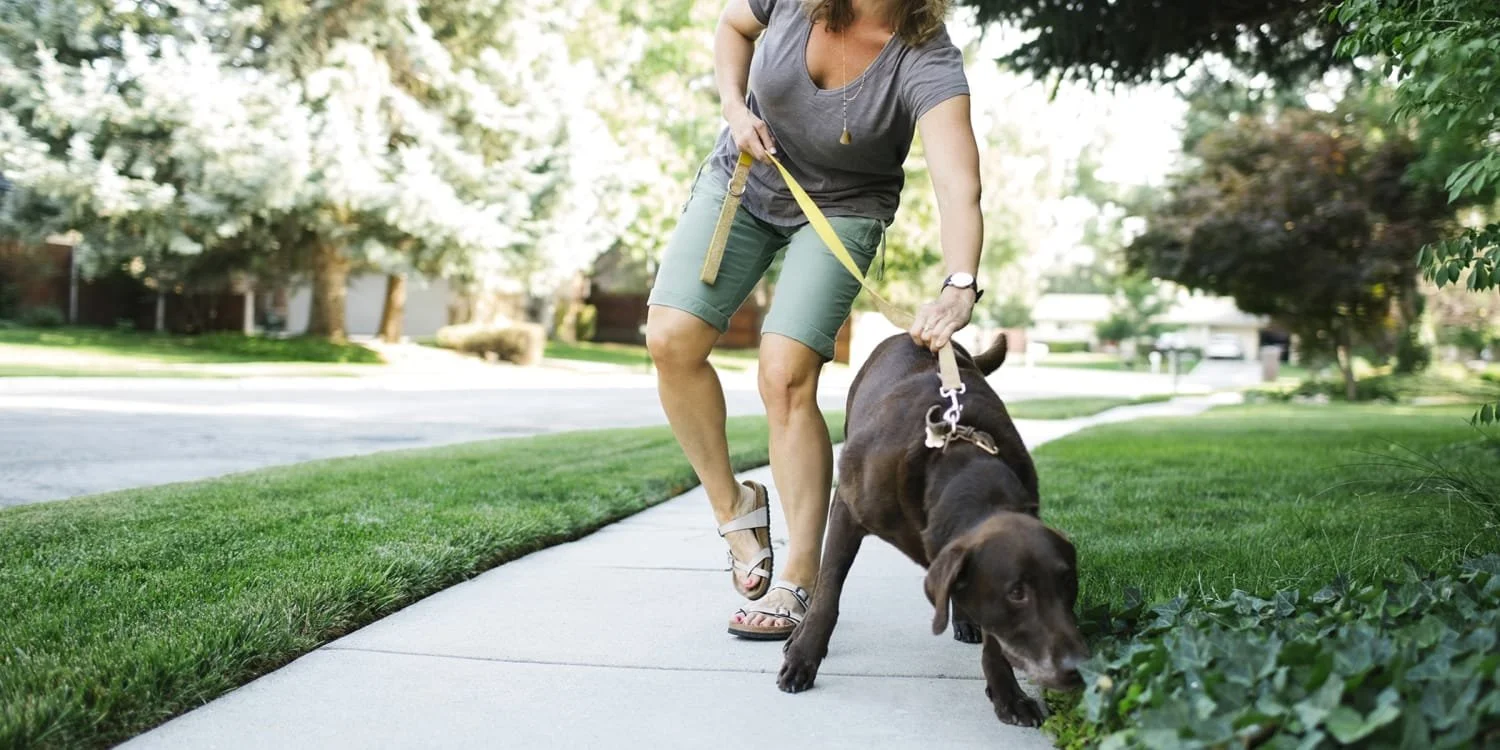
Balance is important for injury prevention for young and old
Falls can happen at any age – mistakes happen, sometimes we trip or slip or do dumb stuff.
Falls are a part of life, but it’s also something we can work on preventing.
In younger people, having good balance reduces the chance of tripping and falling and makes it more likely you can “self‑rescue” if you do stumble.
You might be more likely to catch yourself during a near‑miss on the stairs or a wet floor, react to a shove in a crowd, a cracked sidewalk or a dog knocking you in the park.
Falling at any age can cause an annoying cascade of injuries like twisted ankles, strained muscles and broken wrists. No one likes to rehab an injury or miss out on work, hobbies or school because of a dumb accident.
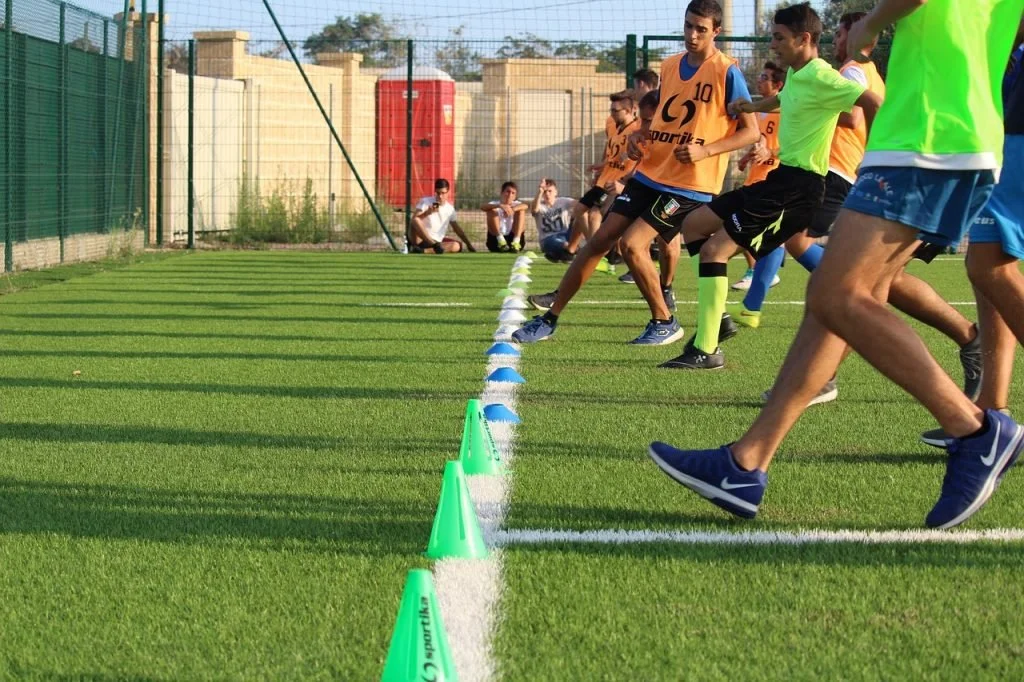
Efficiency and Safety in Sports and Hobbies
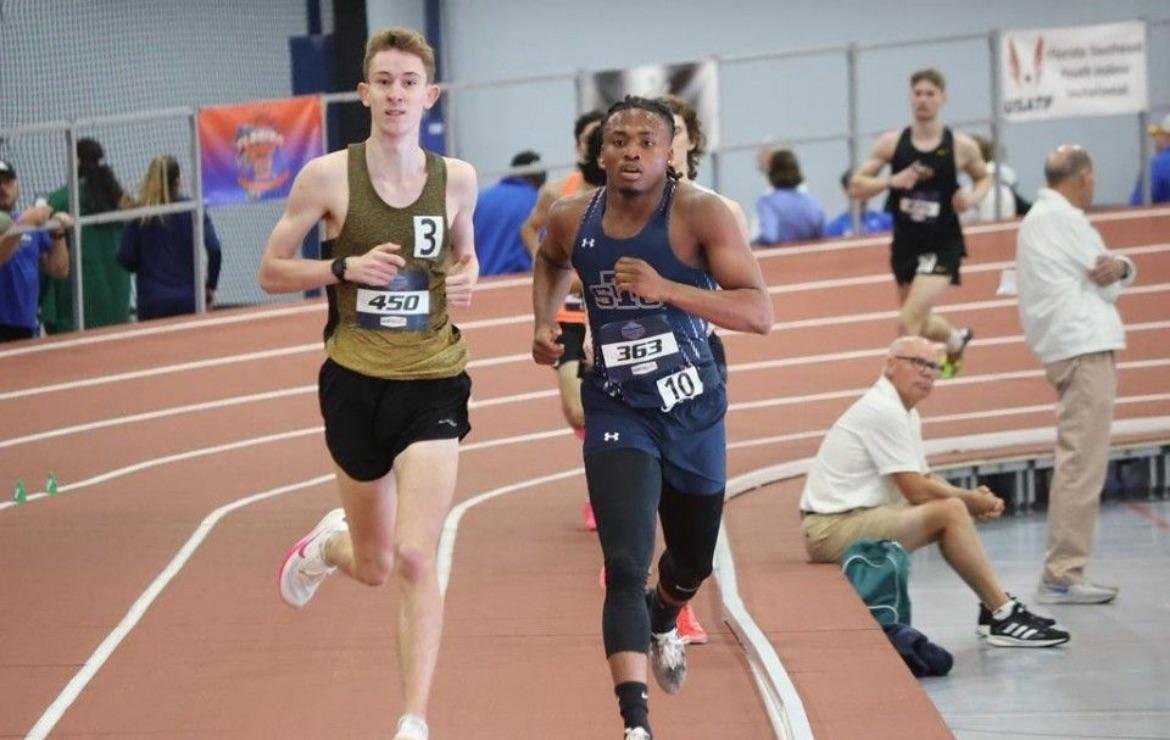
Good balance is a superpower in sports. You use it every time you change direction, jump and land, cut, pivot, or accelerate off an uneven surface.
Dynamic balance helps your body absorb and redirect forces efficiently. That translates into:
Fewer sprains, strains and impact‑related injuries.
Better power transfer through the feet, hips and trunk.
Sharper movement quality under fatigue, pressure and chaos.
If your balance is poor, every one of these tasks takes more energy, more concentration and more physical stress on the body.
When balance is trained, you start to feel smoother, lighter and more powerful.
Improvement in posture, joint health and reduced risk of overuse injuries
When we train balance, we’re teaching our deep stabilising muscles to be more efficient at keeping us upright and steady.
This includes the abdominal and spinal muscles, the hip stabilisers, ankle and foot muscles, neck and scapula muscles.
These muscles create a stable base so the bigger movers (quads, glutes, lats) can do their job without overworking or compensating.
Benefits include:
More movement options and postural variety, keeping your nervous system and body happy.
Better posture that feels relaxed, not rigid or strained.
Happier joints that tolerate load and repetitive tasks more easily.
Reduced risk of overuse injuries because the workload is shared more evenly through the system.
You might not notice these muscles quietly working but you sure notice it if they stop.
Slowing age‑related decline
As we age, our reflexes get slower, our muscle mass reduces and we have changes in vision and sensation – all things that directly contribute to balance.
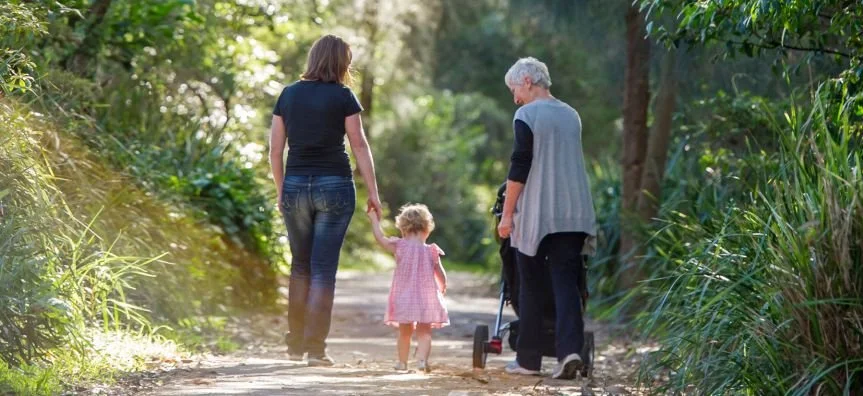
Although it’s easier to work on this when we’re younger, our bodies can adapt at any age with the right stimulus and training.
Regularly training balance can help:
Maintain or even improve reaction time.
Preserve strength and power in the legs and core, making it easier to climb stairs, get off the floor and walk longer distances.
Keep the brain‑body connection sharp, which supports confidence, coordination and overall mobility.
A little goes a long way. Regular training means multiple times a week, but this can be as little as 5–10 minutes spread throughout a day or even in one block.
For an older adult, having confidence in their balance can be really freeing. It can mean walking without a walking aid, saying yes to travel or going for bushwalks with friends and family.
People who are afraid of falling can find their world getting smaller around them as they choose to only do things that they know will be safe. For these people, a fall could mean fractures, hospital stays, loss of confidence and independence.
How to train your balance
Balance training works best when it’s specific to your life and challenging enough to make you concentrate. Falling from time to time is a good thing (so long as it’s safe) as it means you’re both working hard enough to develop your balance and practising your self‑rescue or self‑righting response. You know… for those times you almost take a superman dive off a cracked sidewalk. We’ve all been there.
Here’s a simple framework for working on and progressing your balance.

Progress through these foot positions, from easiest to hardest
Spend about a minute at a time with each foot in front or, if you’re on single legs, give each leg the same amount of practice.
Feet together
Semi‑tandem – feet staggered and apart (alternate which foot is in front)
Full tandem – feet staggered and narrow (alternate which foot is in front)
Single leg (alternate sides)
Single leg tippy toe (alternate sides)
Dynamic balance movements like walking heel‑toe in a straight line, marching on the spot, marching forward
Make each position more challenging by doing the following things:
Change what the head is doing
Move the head left and right, up and down, on a diagonal.
Change where the eyes are looking
Hold your head in a static position: forward, to a side, up or down.
Change where your eyes are looking. Experiment to see if any position is more difficult for the eyes and work on making that easier.
Change what the arms are doing
Swing them side to side, back and forward.
Hold a heavy object in one hand like a weight. Swing that side to side, back and forward, pass it around the body, pass it around your head, pass it around your legs.
Change what the legs are doing
Swing them side to side, back and forward.
Bend forwards or side to side at the hip.
Imagine you’re standing in the middle of a clock and tap one toe where each number would be on the clock. e.g. tap at 12, 1, 2, 3, all the way to 9 or 10 if you can.
Move something on the floor with one leg. E.g. drag a towel with something heavy on it with your toe.
Stand on something different
A pillow, a piece of foam, a rock, a bosu ball, a dura disc, etc.
Dual task
Hold the balance position while talking on the phone, recite the alphabet backwards missing every second letter, drink a glass of water, throw and catch a ball etc. Have fun with this one- no one gets it perfect.
Here are some fantastic follow along balance videos
The first two are a bit more advanced. The last video is a more basic one if the first two feel a bit too challenging.
If you choose the third one, I challenge you to work up to the first two within 6 months!
Training balance is about more than not falling.
It’s a prerequisite for a healthy, active life. It can mean the difference between doing the things you want and feeling like they’re beyond you.
It’s the difference between being good at your sport and being GREAT.
We can’t always stop mistakes from happening, but when they do, having effective balance means you might avoid taking that spill or spraining that ankle. When your balance system is regularly challenged, those moments become manageable rather than dangerous.
Pick one of the balance videos above, start today, and commit to practising it a few times a week. Your future, steadier self will thank you.